

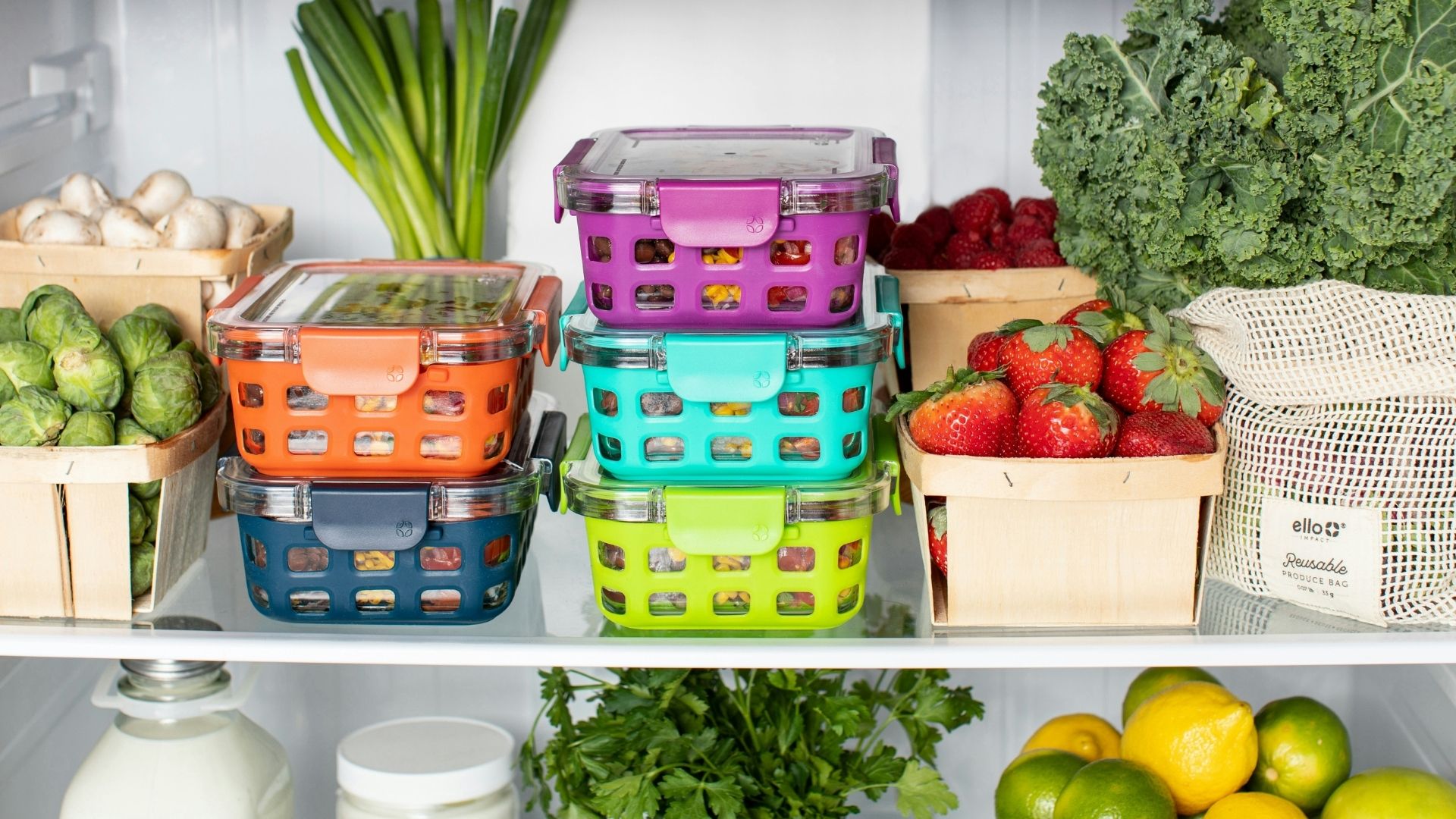
How To Keep Ingredients Fresh For Longer
You work so hard to plan a week of healthy meals. Your fresh produce should last as long as your menu. So when that lettuce starts wilting or those carrots go limp, your agenda goes from “freshly cooked” to “freshly annoyed.”
It doesn’t have to be this way! If you want to avoid dinnertime disappointment and cut down on food waste, we’re here to teach you how to make produce last longer, including how to store your fresh Purple Carrot ingredients when they arrive.
1. Fridge, counter, or pantry: Know where to store your produce
When it comes to proper produce storage, the right location is everything. Generally, you have three options for storing fruits and vegetables: the fridge, countertop, or pantry. Every piece of produce has its own needs regarding temperature, moisture, and light, ultimately determining where they should live until you’re ready to eat.
For instance, berries that thrive in cool temperatures should be stored in the refrigerator, while sweet potatoes get the longest shelf life in cool, dark spots like the pantry. Some produce may also need a location change at some point. For example, avocados ripen on the counter, but they keep best in the fridge before they go beyond being edible.
Understanding your fridge’s temperature zones
Your fridge isn’t one uniform temperature from top to bottom. Different spots offer varying levels of cold and humidity, so be mindful when putting away your fruits and veggies. The back of the bottom shelf, where cold air typically blasts in, is usually the chilliest. You can accidentally freeze high-water content produce, such as cucumbers or berries, if they go too far back.
Most fridges come equipped with a dedicated crisper drawer for produce. This drawer controls both temperature and moisture. However, you don’t want to store all of your produce together in the crisper drawers, as certain fruits and vegetables emit gases that can cause nearby produce to ripen (and thus, spoil) faster. If you’re lucky, your fridge will offer two crisper drawer options, with one for high humidity, ideal for fresh out of the bag items, and another for low humidity, perfect for ripened produce like apples or avocados.
Produce storage chart: A quick guide
| Location | Produce |
| Fridge: Crisper drawer (high humidity) | Leafy greens (Kale, spinach, lettuce), broccoli, cauliflower, fresh herbs (cilantro, parsley, dill), peppers, carrots, beets, turnips, green beans, zucchini, cucumber |
| Fridge: Front of shelf or low humidity crisper drawer | Apples, grapes, citrus (oranges, lemon, lime, grapefruit), berries |
| Ripen on counter in paper bag, then move to fridge (low humidity) | Avocados, stone fruits (peaches, mangoes, apricots, plums) |
| Countertop | Tomatoes, bananas, melons (cantaloupe, watermelon), citrus (if eating within 2-3 days) |
| Pantry | Garlic, onions, potatoes, sweet potatoes, yams, winter squash |
Separate ethylene-sensitive produce
Your fresh fruits and veggies will fall into one of two categories: ethylene gas producers and ethylene-sensitive produce. This hormone tells the cells in surrounding fruits and veggies that it’s time to ripen up. High-ethylene producers include apples, bananas, tomatoes, melons, and stonefruit.
It can be a great cheat code if you need something to ripen quickly, like briefly putting your bananas and avocados in the same countertop bowl. But if you leave it too long, or put a high-ethylene producer next to a more sensitive neighbor, like citrus, berries, leafy greens, cucumbers, broccoli, or grapes, your produce will spoil much sooner. If you’ve ever heard the phrase, “one bad apple spoils the whole bunch,” ethylene gas is the culprit.
Control moisture and air flow
What you store your produce in is just as important as where you store it. The right containers are essential for getting the humidity just right, so you can extend your produce’s shelf as long as possible. Certain produce also needs some room to breathe, and may go bad if packed too closely together. When choosing the right storage containers, here’s what to keep in mind:
Prioritize air flow: If it does best stored at room temperature, give it space to breathe. Pantry items like potatoes and onions need room for air to circulate. Loose bins with extra space are preferred over plastic bags.
- Bag it up: Refrigerated fresh produce, on the other hand, does better when contained. Plastic bags with small vent holes let out just the right amount of moisture for items like grapes, cherries, and carrots.
- Balance the humidity: You’ll want less airflow for items like berries and leafy greens. But there’s contradicting advice on whether airtight is the right approach or if ventilated containers are the way to go. If you do go with an airtight Tupperware or glass jar, adding a dry paper towel can help soak up some of the excess moisture so these items last longer.
- Put in water: For produce like herbs and asparagus, adding moisture to the roots prolongs freshness. Put bunches of fresh basil or parsley in a small jar of water, covered with a plastic bag, before putting them in the fridge. (Think of it like handling a bouquet of fresh flowers.) This can also be achieved with a moist paper towel and reusable plastic bag.
Wait to wash your ingredients
While your produce should get a good rinse before you eat it, you should usually wait until meal time before washing. Rinsing fruits and veggies adds extra moisture that makes it easier for bacteria to grow, speeding up spoiling. If you’re super busy and washing produce as soon as you’re home from the grocery store is what makes sense for you, make sure it’s completely dry before you put it away.
Consider stashing some produce in the freezer
Keep your fresh produce in good condition for months at a time. Aromatics like ginger can easily be chopped up and frozen, as well as a traditional mirepoix blend (carrots, onion, and celery). With this prep, you can just grab and go when it’s time to cook.
Slicing up and freezing fruits like bananas, berries, and stone fruits is also a great way to avoid food waste, perfect for an easy-to-make smoothie blend. Just freeze everything on a tray in a single layer, so your produce doesn’t stick together, before transferring to an airtight bag or container.
Some produce requires a little extra prep before you can freeze it. For instance, if you want to freeze spinach, blanch it ahead of time to preserve freshness and flavor. Winter squashes and zucchinis will also stay in better condition if you steam or roast before freezing.
How to store your Purple Carrot produce when it arrives
Our meals are packaged to maintain freshness, shipped to you in an insulated box and non-toxic ice packs to keep the ingredients cool. All meal kits should be prepared within 3 to 5 days of receiving them. Ready to eat meals are fresh for up to 7 days after arrival, or you can freeze them and enjoy later, before the “best by” date on the package.
We recommend following the tips in this blog to keep all your produce in top shape. As a quick refresher:
- Put all produce in its appropriate temperature zone in your fridge.
- Separate the high-ethylene producers to extend the produce’s shelf life.
- Leafy greens should be stored in open produce bags in your fridge.
- Herbs should be placed in a little bit of water, or you can wrap them in a paper towel and place them back in the container they came in.
Frequently asked questions about storing fresh produce
What produce doesn’t belong in the fridge?
Whole potatoes, onions, tomatoes, and bananas should not be stored in the fridge. These fruits and veggies do better at room temperature. Potatoes and onions also need a cool, dark space like the pantry. When exposed to light, potatoes start to produce chlorophyll, eventually turning them green and making them unsafe to eat.
What makes produce ripen faster?
Ethylene gas speeds up the ripening process. When fruits like apples or bananas, which are high-ethylene producers, are close to other produce, they can make other items ripen faster. Unfortunately, this also means items sitting near ethylene producers also spoil faster, so it’s best to store low ethylene producers separately.
Should you put avocados in the fridge?
Avocados can be kept in the fridge after they’re ripe, but it’s best to let them ripen on the counter first. Otherwise, you’ll be stuck with rock hard avocados that you can’t eat.
What types of produce lasts longest?
Root vegetables and citrus have some of the longest shelf lives when stored properly. Potatoes can last up to 3 months with enough air flow in the pantry and fruits like oranges and lemons can last up to 2 months in a mesh bag in the fridge.
What is the shelf life of a Purple Carrot meal kit?
Purple Carrot meal kits should be prepared within 3 to 5 days of receiving them.
What is the shelf life of Purple Carrot ready to eat meals?
Ready to eat meals should be enjoyed within 7 days of receiving them, or you can freeze the meals and enjoy them by the date stamped on the package.
Does pre-cut produce spoil faster than whole produce?
When sourced from reputable vendors, most pre-cut produce should last for several days when stored properly in the fridge. At Purple Carrot, our culinary team has a rigorous testing process to ensure all produce, whole and cut, arrives fresh and flavorful.
How long does plant-based protein stay fresh?
Plant-based proteins like tofu, tempeh, and seitan last for 2 to 3 months when stored properly in the fridge.
