

The Purple Carrot Guide To Cooking Mushroom Meat
When eating fewer animal products, it’s easy to incorporate only at actual plants, but fungi can (and should!) be part of the story too.
Mushrooms are an exceptional pick for replicating meat, with different types of mushrooms most adequately replacing different types of meats. It’s all about how you cook each type of mushroom, and with this primer on how to cook mushroom meat, you’ll put the fun in fungi.
What makes mushrooms a good meat substitute?
Mushrooms are an excellent substitute for meat given their similar textures and flavors, as well as their shared ability to brown beautifully. Depending on how you cook them, mushroom texture ranges from chewy and dense to crispy or tender. They’re as good at meat as soaking up marinades and browning at the edges. And mushrooms and meat alike are among the relatively small number of foods naturally packed with umami flavor.
Mushrooms vs. tempeh, tofu, and seitan: When to use what
If you have access to every type of mushroom, you have the ability to substitute mushrooms for meat in any application. In that regard, there’s no bad time to use them, but nutritionally, there’s a huge drawback: They’re not always protein-dense.
Tofu, tempeh, and seitan, by comparison, are so packed with protein and low in calories they’re often seen as the three best plant-based proteins. Yes, tempeh and seitan are more expensive than some more widely available types of mushrooms, but they’re often worth the spend for their protein density (amount of protein per calorie). Plus, the less widely available types of mushrooms can be pretty pricey too.
Tofu, tempeh, and seitan are all great options for replacing meat in a stir-fry while getting just as much protein, even if only seitan’s texture outright mimics that of meat. Additionally, sliced tempeh can be prepared to resemble bacon, and tofu is a great substitute for eggs in a scramble. None of these plant-based proteins brown like mushrooms (though tofu and tempeh can get beautifully golden), and mushrooms are even lower-calorie.
In short: Substitute mushrooms for meat when texture, flavor, browning potential, and lower calorie intake come first. Substitute tofu, tempeh, and seitan when protein intake comes first (though seitan and mushroom replicate meat textures equally well). Consider your budget too — you can always find a mushroom or plant-based protein within it, whereas that may be less true of tempeh or seitan.
Learn more about tofu, tempeh, and seitan with our guides to tempeh vs. seitan and seitan vs. tofu.
4 steps for cooking mushrooms as a meat substitute
When cooking mushrooms in place of meat, starting with the right mushroom is key, as are marination, browning, and your choice of flavor base.
Choose the right mushroom for the right meat
Those button mushrooms you see at the average supermarket? Delicious, but not a great starting point for mimicking meat texture with mushrooms. Do a little more digging to find the following mushrooms that sub wonderfully for the following meats.
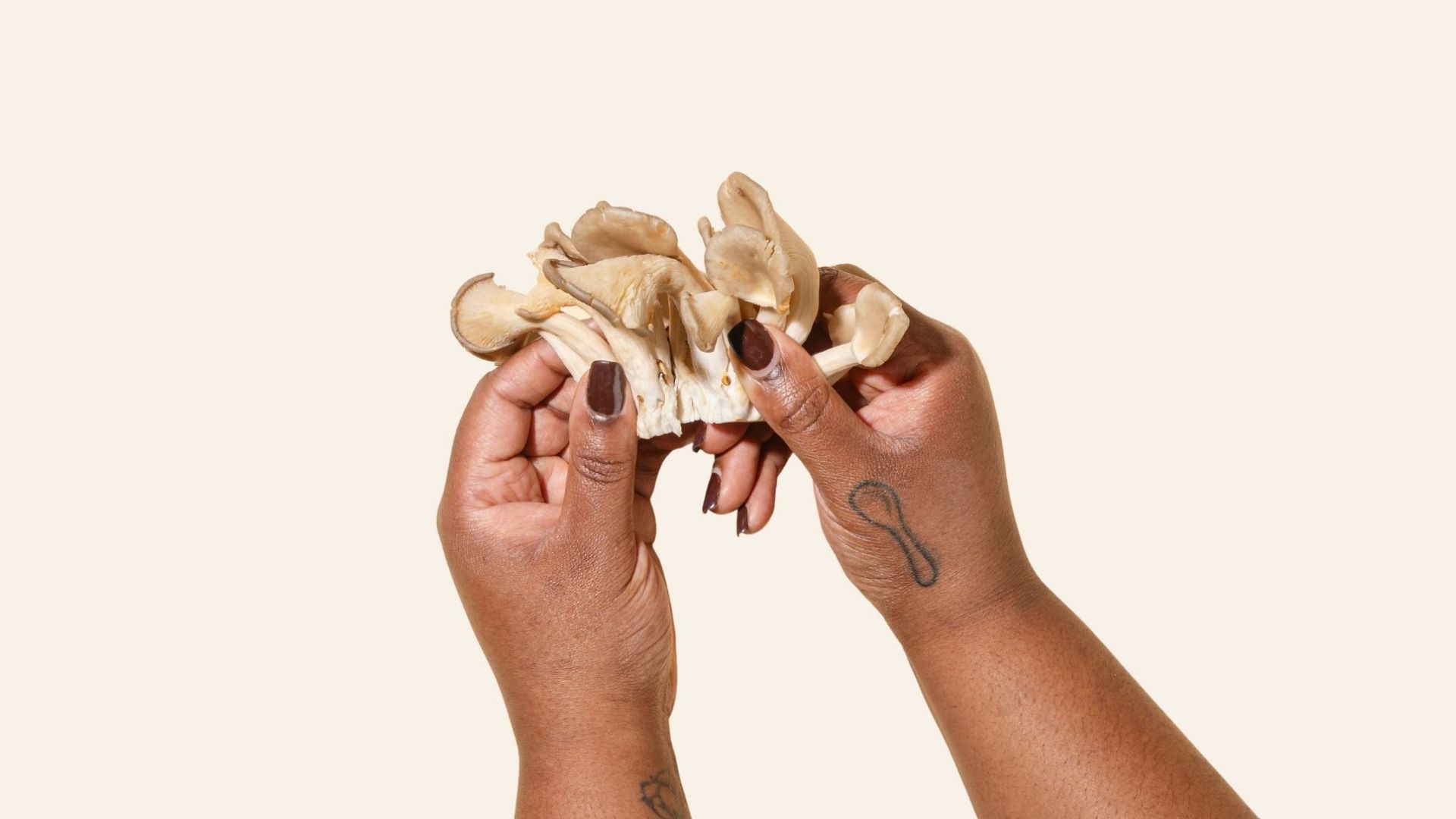
- Oyster mushrooms: These frilly mushrooms with thick stalks and tops that resemble saucers get crispy and tender, making them great for Taco Tuesday and replicating seafood textures. They’re also the star of our Baked Oyster Mushroom Dynamite dish, the name of which speaks for itself.
- King oyster mushrooms: The exceptionally thick stalks on these mushrooms are firm, chewy, and easy to slice, so they emulate scallops and shrimp beautifully.
- Portobello mushrooms: If your mind goes to portobello burgers when thinking of these giant flat mushrooms, you’re absolutely correct. These juicy shrooms can also be transformed into plant-based steaks or tender vessels for grains and veggies, as in our Stuffed Portobello Mushrooms recipe.
- Shiitake mushrooms: Naturally chewy and savory, shiitake mushrooms are ideal anytime you’re ditching meat in a broader dish like a stir-fry, pasta, or soup. They’re also the main ingredient in Fable® Shitake Protein, a pulled mushroom blend that’s perfect for replacing pulled pork or braised beef, like in these popular Bulgogi Lettuce Tacos.
- Cremini mushrooms: Also known as baby bella mushrooms, these may be easier to find than shiitake mushrooms and can serve the same purposes, just like in our One-Pot Mushroom Stroganoff recipe.
- Maitake mushrooms: Though perhaps the hardest mushroom on this list to find, maitake mushrooms’ delicate frills and layers give them a bacon-like texture.
- Lion’s mane mushrooms: You can press these fuzzy, stringy, rare-find mushrooms into steak-like shapes perfect for your favorite searing pan.
| Mushroom Type | Substitute For |
| Oyster | Seafood, poultry |
| King Oyster | Scallops, shrimp |
| Portobello | Beef, burgers, steaks |
| Shiitake | Chewy element in dishes |
| Cremini | Beef, chewy element in dishes |
| Maitake | Bacon |
| Lion’s Mane | Steak, chicken, crab |
Marinate your mushrooms if they’re dense
Although mushrooms are naturally umami-rich, that alone doesn’t give them a meaty flavor. If you’re working with dense mushrooms like king oysters and portobellos, marinating your mushrooms before you cook with them bridges this gap.
A good mushroom meat marinade is rich in soy sauce, which is salty and, among condiments, especially associated with umami flavor. Beyond soy sauce, the ingredients in a marinade will vary by recipe, but there’s never anything wrong with adding additional umami ingredients to your marinade. Sprinkle dried seaweed, add miso paste — the world is your oyster mushroom.
Brown your mushrooms to get the moisture out
Steaming mushrooms may seem appealing if you’re minimizing oil in your diet, but it doesn’t do anything to give mushrooms flavor or texture. Instead, sauteing your mushrooms in hot oil or plant-based butter on medium to medium-high heat for five to 10 minutes cooks the water out, leaving behind chewy, meaty textures. This step is a huge part of our BBQ Portobello Mushrooms over Mashed Sweet Potatoes recipe’s meaty magic.
After the water cooks out, the browning that starts to happen after, known as the Maillard reaction, is well-known among chefs to enhance flavors. That’s as true for meat as for mushrooms, and it’s simply not going to happen if you steam your mushrooms.
Choose the right flavor base
Most recipes for how to cook mushroom meat will tell you to flavor your mushrooms with garlic, oil or plant-based butter, soy sauce, and fresh herbs. In general, that’s a pretty safe starting point, and fresh herbs and garlic are indeed the flavor base for our utterly delectable Pan-Roasted Wild Mushrooms recipe. That said, you may want to vary your flavor base a bit depending on your desired preparation.
For Maitake mushroom bacon, some maple syrup or liquid smoke can make a huge difference, and for oyster mushroom taco “chicken,” poultry seasoning is essential. Purple Carrot’s Fable® Shitake Protein is made to be versatile for just about any combination of flavors, from these Spicy Quesabirria Tacos to our sweet Bali BBQ. Shape your flavor base around your target outcome — fishy king oyster scallops, beefy portobello burgers, you name it — and you’ll be a happy home chef.
5 tips for replicating meaty texture and flavor
To get the most meat-like texture and flavor from mushrooms, resist the temptation to skip cooking the water out. Additionally, be sure to salt at the right time, avoid overcrowding your pan, consider pressing your mushrooms, and add a nice finishing touch.
- Seriously, cook out the water: It’s understandable to want to skip this step since it adds more cook time, but don’t do it! Without this step, you’ll get nowhere in making your mushrooms resemble meat.
- Add salt only after the water cooks off: Although you might think that salting mushrooms draws their water out faster, the opposite has been shown to occur. Salt your mushrooms only after browning so that you don’t needlessly slow their cooking.
- The more cooking space, the merrier: A single layer of mushrooms browns much more efficiently and effectively than mushrooms crowded into too small of a pan. Either cook your mushrooms in batches or use the widest pan you can find.
- Pressing is often an option: Lion’s mane mushrooms aren’t the only example. Any thick mushroom, from portobellos to king oysters, may benefit from pressing since it exposes more surface area for browning.
- Finish things off brightly: Famed chef Samin Nosrat’s “salt, acid, fat, heat” adage applies to mushrooms too. With salt from the soy sauce, fat from the cooking oil, and heat if you can handle it, all that’s left is acid. A splash of lemon juice or balsamic vinegar should do the trick — it’s the secret finishing touch to so many meat dishes.
Make mushroom meat an easy staple with Purple Carrot
Instead of searching grocery stores for the right type of mushroom and looking all over the internet for recipes, just choose Purple Carrot. With our meal kits and recipes, you get the exact mushrooms you need, from portobello to king oyster, alongside all the flavoring ingredients and instructions. It’s all beginner-friendly, plant-based, and developed by chefs and dietitians — shop Purple Carrot now for $100 off your first month of meal kit deliveries!
